Organization
TBD - Organizational Chart
Leadership
- Mitchel Mayberry, US Director, Director of Worldwide Marketing
- Christopher Kaler, Director of Worldwide Media and Publications
- Michael Williams, East Coast Director

Mitchel Mayberry
Grandmaster, Dekiti Tirsia Siradas
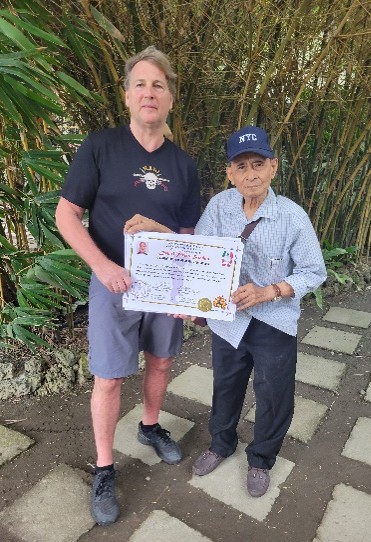
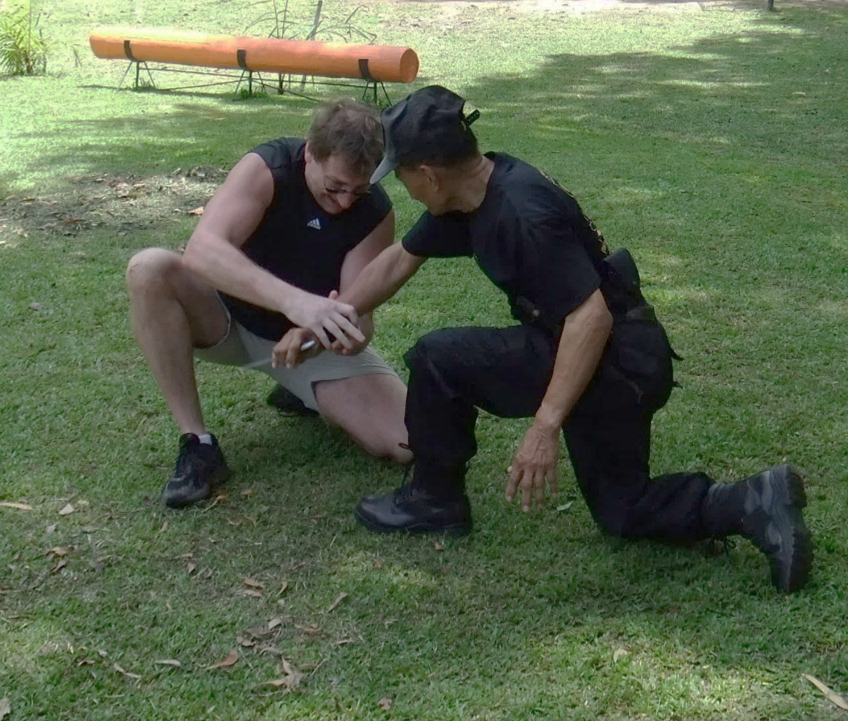
Mitchel Mayberry is a lifelong martial artist whose training has always extended well beyond any single system. Long before becoming known for his role in Dekiti Tirsia Siradas, he had already spent years immersed in striking, grappling, and weapons-based disciplines. His background includes Chinese martial arts and traditional Chinese weapons, Japanese sword arts, Okinawan kobudo, Hapkido knife work, and short staff training, along with broad experience in competitive long and short weapon free fighting. From an early age, he was drawn to combat arts through film, historical weaponry, and the martial legacy surrounding Bruce Lee and the Seattle martial arts community.
That broad foundation shaped the way he approached every art he encountered. Rather than treating systems as isolated styles, Mayberry sought the underlying principles that connected them: structure, timing, range, pressure, and the relationship between weapon and empty hand. His path brought him into contact with influential teachers and traditions connected to Taky Kimura, Richard Bustillo, Dan Inosanto, Remy Presas, Angel Cabales, Leo Giron, Chris Petrilli, Cacoy Canete, and others. Over time, this wide-ranging experience gave him both a deep technical base and a rare ability to compare how different traditions solve the same combative problems.
Within Filipino martial arts, that search eventually led him to Grandmaster Jerson "Nene" Tortal and the Tortal family system of Dekiti Tirsia Siradas. He recognized in DTS the same close range precision, pressure, and practical efficiency that had drawn him to serious martial training all along. He went on to study extensively in the Philippines and became one of the leading figures in the preservation and international expansion of the system.
As a senior representative of DTS, Mayberry helped organize seminars, guide instruction, and create authorized training materials for students around the world. In 2004 he was appointed Marketing Director for World DTS and was instrumental in producing the first authorized DTS training manual, The Foundation, along with an instructional video series and other materials that helped preserve and transmit the art. His work reflects not only dedication to DTS, but also a lifetime spent bridging weapon arts, empty hand systems, and traditional martial knowledge across cultures.

Christopher Kaler
Master Instructor, Dekiti Tirsia Siradas
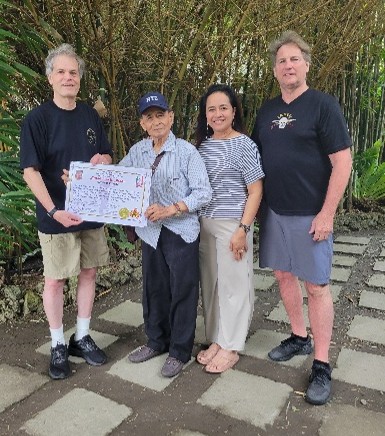
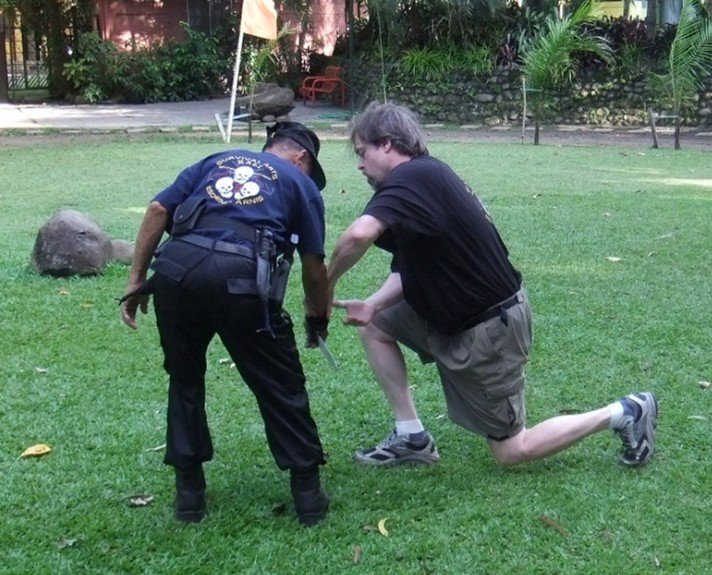
Christopher Kaler's martial arts journey began through a search for training opportunities for his son, a decision that unexpectedly opened the door to a much broader path of study. Under Mitchel Mayberry, he entered a genuinely multi-disciplinary training environment that reached across Korea, Japan, Okinawa, China, and the Philippines. His early and continuing foundation therefore included not only Filipino martial arts, but also Taekwondo, Tang Soo Do, Hapkido, Kenjutsu, Aikido, Karate, Kobudo, and multiple Chinese martial arts traditions. From the beginning, his training was shaped by the idea that no single art holds the whole picture.
That broader perspective became central to his development. Through Mayberry's network, Kaler trained with and learned from teachers representing a wide range of lineages and specialties, including Andy Dale, Mak Hin Fai, Dean Stephens of the Odo sensei lineage, Larry Isaac, and Jessie Roe in medieval fighting, while also meeting and speaking with senior masters such as Don Shapland and Neil Stolsmark. These experiences reinforced an approach to martial arts rooted not only in technical skill, but in history, context, and the preservation of living traditions. He and Mayberry came to see this work as a kind of martial arts historical mission: traveling, training, and learning directly from old-school teachers whose knowledge was grounded in practical experience.
Within that wider martial framework, Filipino martial arts became a central area of focus. Kaler began in Modern Arnis, Serrada Eskrima, and Dekiti Tirsia Siradas under Mayberry, then expanded his study through extensive travel and training in the Philippines. There he worked with Grandmaster Jerson "Nene" Tortal, Cacoy Canete, Frank Aycocho, and many other respected teachers, while also broadening his understanding through systems such as dumog, mano y mano, pangamot, and related disciplines. Training in traditional environments in Negros, Cebu, and Manila gave him direct exposure not only to technique, but to the culture, conditions, and personalities that shaped the arts.
Today Kaler continues to teach as a Master Instructor in Dekiti Tirsia Siradas, but his work reflects a larger synthesis formed through decades of multi-style training. His approach is informed by Japanese, Okinawan, Korean, Chinese, and Filipino systems alike, and by a continuing commitment to document, preserve, and pass forward the teachings of the masters he has encountered. Alongside Mayberry, he has also helped introduce DTS internationally, contributing to its growth while maintaining a strong respect for lineage, history, and cultural roots.

Michael Williams
TBD